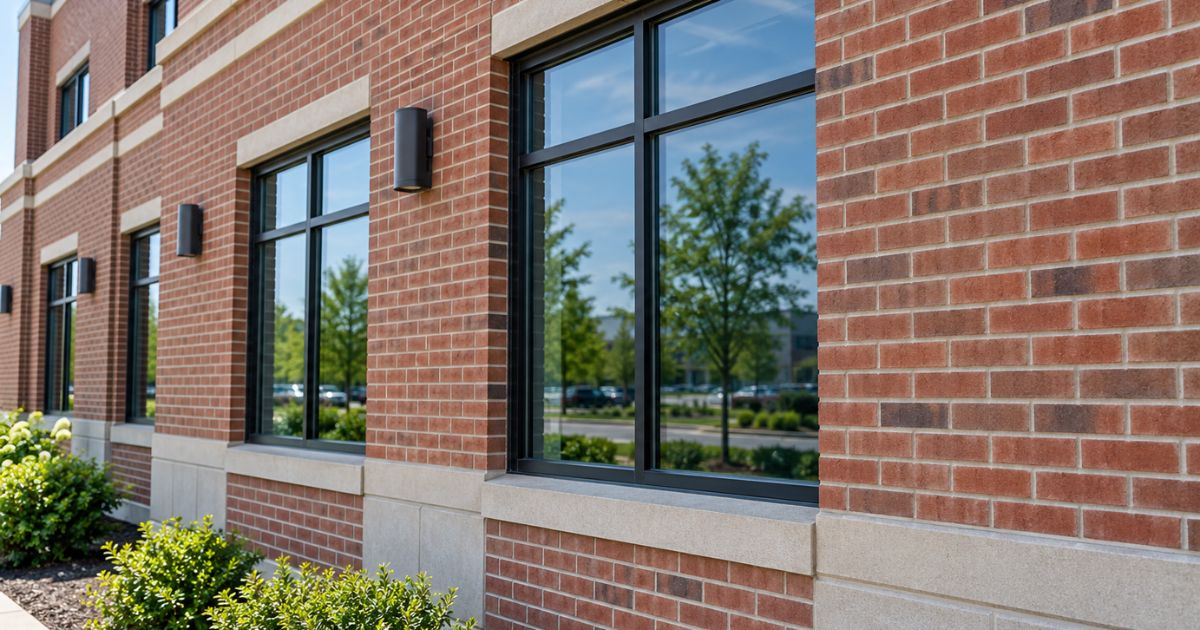
From the outside, a commercial brick façade can look perfectly sound.
The brick appears intact. The mortar joints look relatively healthy. There are no obvious cracks or signs of water damage.
But what’s happening behind the brick may tell a different story.
Moisture can make its way into a masonry wall through deteriorated mortar, failed sealants, flashing deficiencies, cracks, and other vulnerable areas. When the wall can no longer effectively manage and drain that moisture, water may remain concealed within the assembly long before building owners notice a problem.
Understanding how water moves through masonry—and recognizing the warning signs of trouble—can help prevent hidden moisture from becoming a much larger restoration project.
Does Brick Let Water Through?
One common misconception is that a brick façade should create a completely waterproof exterior surface.
In reality, brick and mortar can absorb some moisture when exposed to rain and weather. Many masonry wall assemblies are designed with this in mind.
Behind the exterior brick veneer, properly designed systems may incorporate drainage cavities, flashing, weep holes, and other components that help collect incidental moisture and direct it safely back outside.
Sealants, mortar joints, coping, and other exterior details also play important roles in controlling how much water enters the wall in the first place.
The goal isn’t necessarily to prevent every trace of moisture from ever passing through the exterior surface. It’s to manage that moisture and give it a reliable way out.
Problems develop when excessive water enters the wall—or when the systems intended to manage it stop functioning properly.
How Does Water Get Behind a Brick Façade?
There isn’t always one obvious source of masonry water intrusion. In many cases, several small deficiencies can contribute to the problem.
Common entry points include:
Deteriorated Mortar Joints
Mortar naturally weathers over time. As joints crack, erode, or become loose, they can allow more moisture into the wall assembly.
Failed Sealant Joints
Sealants around windows, doors, expansion joints, and material transitions are designed to accommodate movement while keeping water out. As they age, they may crack, shrink, or pull away from adjacent surfaces.
Cracked or Damaged Masonry
Cracks in brick or other masonry materials can provide additional pathways for water to move deeper into the wall.
Flashing Deficiencies
Flashing helps collect moisture within the wall and direct it toward the exterior. Damaged, deteriorated, missing, or improperly installed flashing can interfere with that process.
Blocked or Missing Drainage Paths
Weep holes and drainage cavities need to remain functional for moisture to escape. If those pathways become blocked or were not properly constructed, water may remain trapped within the assembly.
Parapet and Coping Problems
Not all water enters through the face of the wall. Failed coping or other deficiencies at the top of a parapet can allow moisture to enter from above and travel downward through the masonry.
Why Water Intrusion Can Stay Hidden
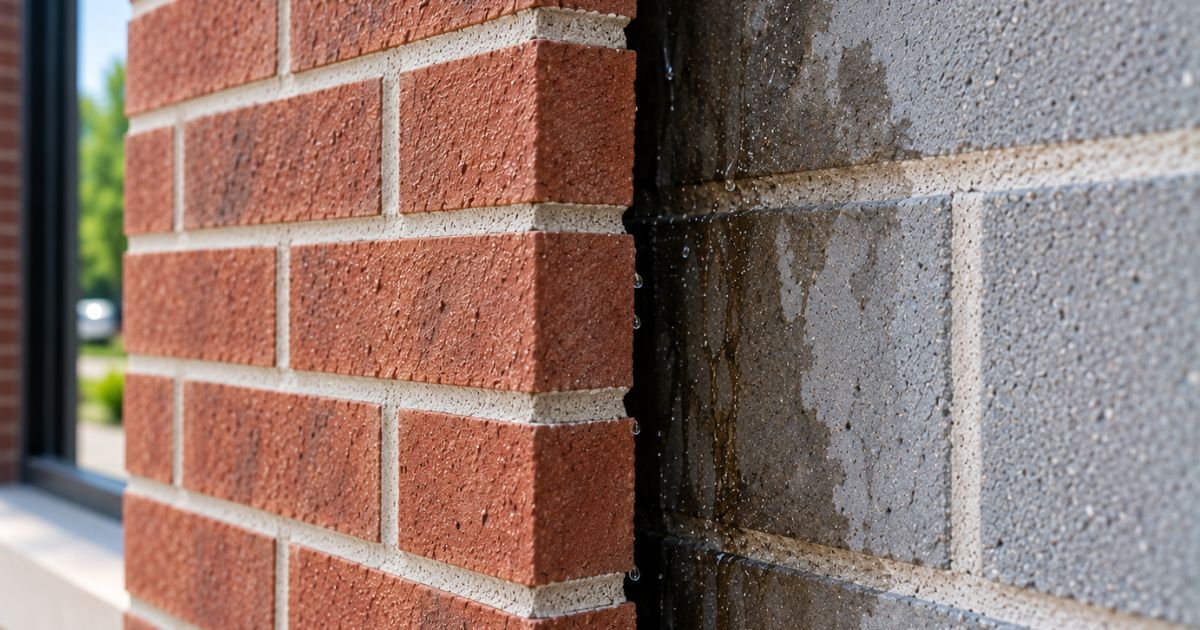
One of the biggest challenges with masonry water intrusion is that the location where water becomes visible may not be where it entered.
Once behind the brick veneer, moisture can move through the wall assembly. It may travel vertically or horizontally, collect in cavities, affect insulation, or come into contact with concealed structural components.
Eventually, it may reach an interior surface and appear as a ceiling stain, damp wall, peeling paint, or active leak.
By then, the original entry point could be several feet away.
This is why a building can have a clean-looking exterior façade while moisture-related deterioration is already developing behind it.
What Happens When Moisture Can’t Escape?
A properly functioning wall assembly is designed to manage moisture. When water becomes trapped or repeatedly enters faster than it can drain, however, problems can develop.
Persistent moisture may contribute to:
Masonry Deterioration
Repeated moisture exposure can accelerate deterioration of mortar joints and masonry materials.
Freeze-Thaw Damage
In climates with freezing temperatures, moisture absorbed by masonry can freeze and expand. Repeated freeze-thaw cycles can contribute to cracking, spalling, and surface deterioration.
Corrosion of Concealed Metals
Steel lintels, anchors, and other metal components within masonry walls may begin to corrode when repeatedly exposed to moisture.
As corrosion progresses, expanding steel can place additional pressure on surrounding masonry.
Reduced Insulation Performance
If insulation becomes wet, its thermal performance may be reduced until the underlying moisture problem is corrected and affected materials are addressed.
Interior Water Damage
Moisture that reaches the interior can damage drywall, ceilings, paint, flooring, and other finishes.
Persistent damp conditions may also create an environment where mold or other moisture-related biological growth can develop on susceptible materials.
Warning Signs Building Owners Should Watch For
Hidden moisture doesn’t always stay hidden forever.
Building owners and facility managers should watch for exterior and interior warning signs such as:
- White deposits or efflorescence on masonry
- Dark staining or discoloration
- Cracked or deteriorating mortar joints
- Spalling or flaking brick
- Cracks around windows and other openings
- Rust staining
- Interior water stains
- Peeling or bubbling paint
- Recurring leaks during wind-driven rain
- Persistent musty odors near exterior walls
None of these symptoms automatically identifies the source of a moisture problem. However, they can indicate that the building envelope deserves a closer look.
Why Patching the Visible Problem May Not Be Enough
When water appears inside a building, the natural reaction is to repair the area closest to the leak.
But masonry water intrusion doesn’t always work that way.
An interior leak near a window, for example, could originate from deteriorated sealant around the opening—or from a flashing, mortar, or coping problem located elsewhere.
Simply applying new sealant or patching a visible crack without identifying the actual moisture pathway may temporarily hide the symptom without correcting the underlying problem.
Effective restoration starts by asking a different question:
How is the water getting into the wall in the first place?
How Professionals Investigate Masonry Water Intrusion
Determining the source of water intrusion often requires looking at the building envelope as a complete system.
Depending on the building and the symptoms present, an evaluation may include reviewing:
- Mortar and masonry conditions
- Sealant joints
- Windows and penetrations
- Flashing and drainage details
- Weep systems
- Parapets and coping
- Areas of visible interior or exterior moisture damage
Additional moisture testing or selective investigation of concealed conditions may also be appropriate in some situations.
The objective is to understand where water is entering, how it is moving through the assembly, and why it isn’t draining as intended before determining the appropriate repair strategy.
Repair the Cause, Not Just the Damage
Once the source has been identified, the right solution depends on the conditions affecting the building.
Repairs may include tuckpointing deteriorated mortar, replacing failed sealants, repairing damaged masonry, correcting flashing deficiencies, restoring drainage paths, addressing deteriorated lintels, or repairing parapet and coping systems.
In many cases, multiple components need to work together to properly manage moisture.
Addressing those vulnerabilities early can help limit deterioration, preserve existing masonry, and reduce the likelihood of more extensive restoration later.
Protect What’s Happening Behind the Brick
A masonry façade doesn’t have to look severely damaged for a moisture problem to be developing behind it.
That’s why proactive building envelope assessments are so valuable.
At Cleveland Building Restoration, we look beyond visible masonry damage to understand the conditions contributing to it. By identifying how water is entering and moving through the building envelope, our team can develop practical restoration strategies that address the source of the problem and protect the building for the long term.
If you’ve noticed staining, deteriorating mortar, unexplained interior leaks, or other signs of moisture around your masonry façade, a professional assessment can help determine what’s happening beneath the surface.
Because the brick may look dry. The wall behind it may tell a different story.